


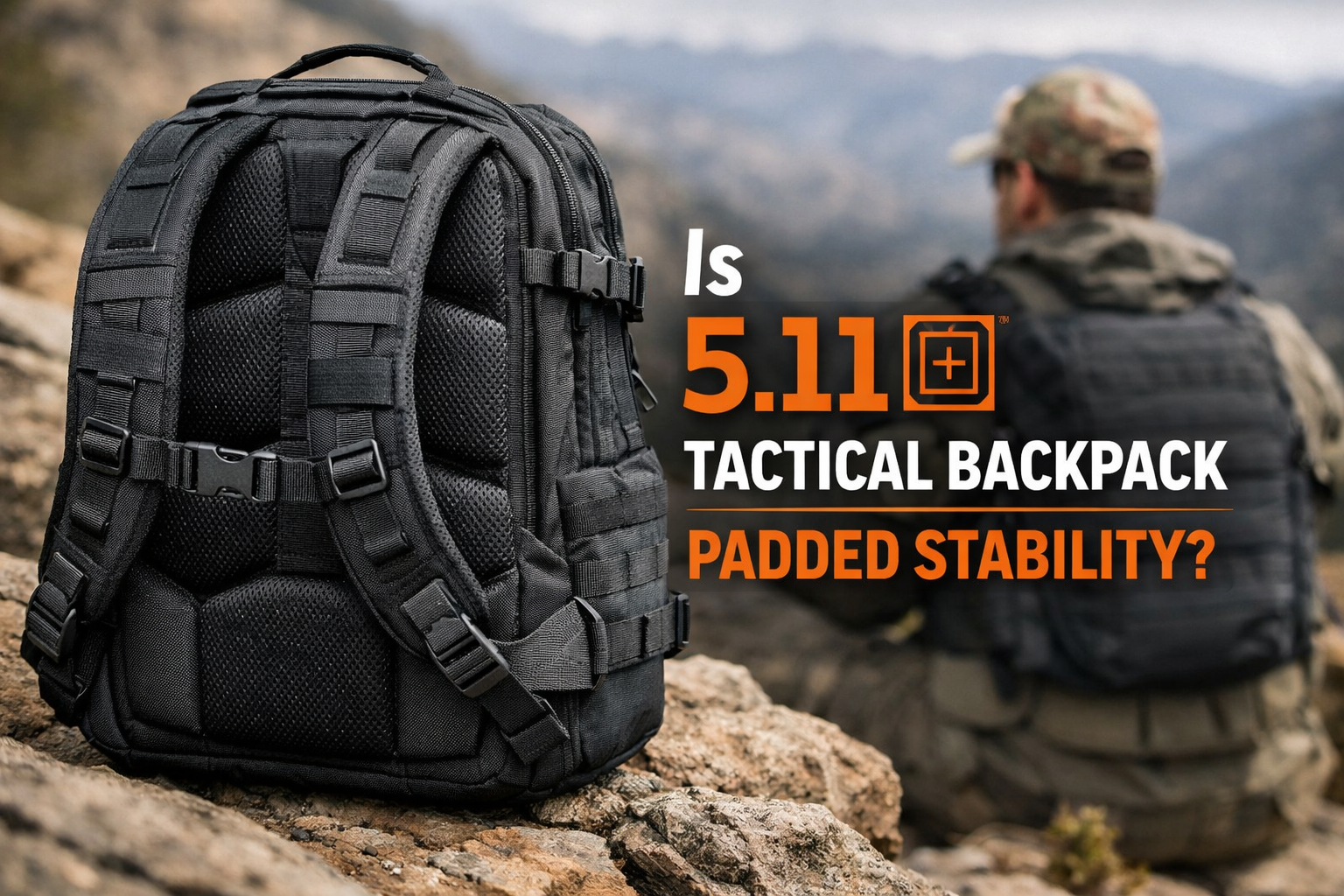
We’ve run 5.11 packs hard, and here’s the straight dope on their padded stability. You’re asking if the padding works to keep your load steady, not just soft. The answer isn’t a simple yes or no, it’s about how they engineer it. We’ve seen firsthand how crucial proper padding is, not just for comfort, but for keeping a heavy pack from throwing you off balance when you’re moving fast or over rough ground. Our experience tells us that 5.11 mostly gets this right, but it depends on the pack and your load.
The Back Panel’s Role in Load Stability
The back panel padding on a 5.11 pack isn’t just there to cushion your spine. Its primary job, for stability, is to create a firm, yet comfortable, contact point that keeps the pack from sagging or shifting. We’ve seen cheaper packs where the padding collapses, letting the load pull away from your body. That instantly kills stability. 5.11 typically uses dense foam, often with air channels, designed to maintain its structure under load. This keeps the pack’s center of gravity close to your own, which is the foundation of any stable carry. Without that rigid, padded interface, no other component can truly stabilize the load.
Shoulder Straps and Their Padded Embrace
Properly padded and contoured shoulder straps are critical for stability, not just comfort. The padding needs to be firm enough not to compress completely, preventing the pack from bouncing up and down. We’ve learned that poorly padded straps let the pack ride low or shift side-to-side, especially when you’re moving dynamically. 5.11 generally designs its shoulder straps with good density padding and anatomical curves. This ensures the pack stays high and tight on your upper back, distributing weight evenly and preventing lateral sway. If the straps are too soft or too thin, the pack becomes a pendulum.
Hip Belt
The Anchor of Stability (and its Padding) For larger 5.11 packs, the hip belt is where true stability anchors. Its padding isn’t just about cushioning; it’s about creating a robust connection to your hips to transfer weight off your shoulders. We’ve seen users ignore the hip belt, thinking it’s just for comfort. Big mistake. A well-padded, stiff hip belt on a 5.11 pack locks the load into your core. The padding needs to be substantial enough to distribute the weight across your pelvic bone without digging in, while still being rigid enough to prevent twisting or rocking. It’s the primary interface that prevents the entire pack from sloshing around.
You may Also Like-
Is the 5.11 Rush 72 2.0 Worth It?
Pro Tips From Real Experience
Don’t just trust the padding; how you pack it matters more for stability. We learned early on that even the best 5.11 design won’t save a poorly packed bag. Heavy items need to be centered and high in the main compartment, close to your back. Cinch down all compression straps. They are not just for aesthetics; they pull the load in tight to the frame and padding, making the whole system feel like an extension of you. If you leave things loose, the best padding in the world can’t stop internal shifting, and that kills stability faster than anything.
Conclusion
Yes, 5.11 tactical backpacks provide good, padded stability. They design padding of backpacks not just for comfort, but for structural integrity and load control. We’ve found their systems generally hold up, keeping the pack tight and centered, assuming you pack it correctly. It’s about purposeful padding that works with the rest of the pack, not just soft foam.
Frequently Asked Questions
Does all 5.11 padding provide the same stability?
No, it varies by pack size and model. Larger packs built for heavy loads will have more robust, focused on padding than smaller EDC bags.
Can I add extra padding for better stability?
You can, but we often see it make things worse. Adding unengineered padding can shift the load or create pressure points. Better to adjust existing straps or repack.
Is back panel stiffness more important than padding for stability?
Both are critical. The padding interfaces with your body, but the internal frame or stiffener behind it provides the actual structure to prevent sag and maintain stability.
Does padding degrade over the time, affecting stability?
Yes, years of heavy use, foam padding can compress and lose its density, reducing both comfort and stability. This is normal wear and tear.

