


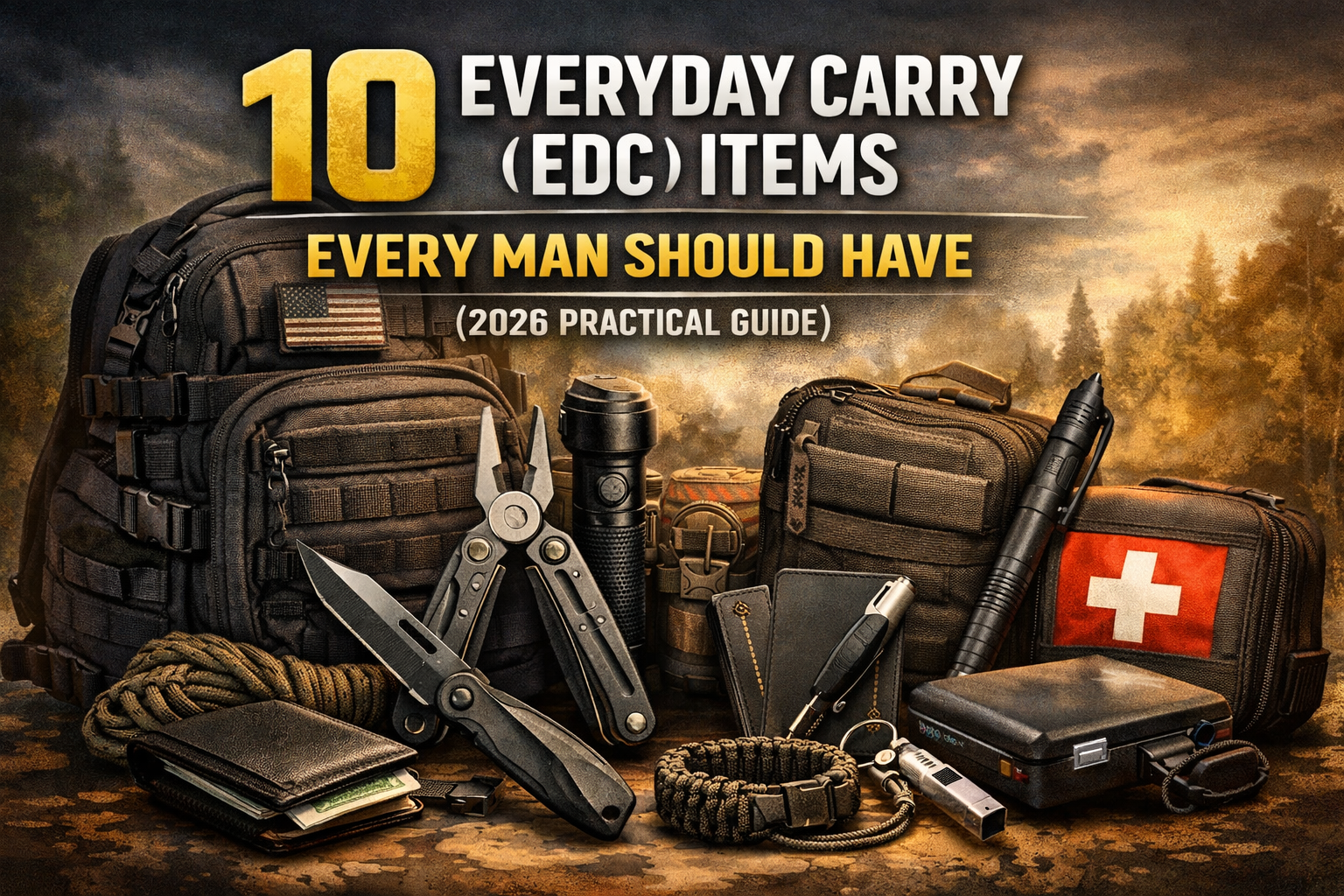
Imagine you’re somewhere: whether at work, traveling, hiking, or just hanging out, and suddenly something unexpected happens. Your mobile battery dies, you need to cut a package, a car screw is coming out, or you or someone around you needs first aid. Probably more than half of people are never prepared for such situations, but those who carry EDC gear probably are.
Everyday carry gear doesn’t mean carrying a backpack full of random stuff; it actually means carrying some practical items that might come in handy at some point, whether it’s for personal casual needs or an emergency situation.
And this isn’t just hearsay; it’s been observed over the past few years that EDC setups have become increasingly popular among outdoor enthusiasts, travelers, adventurers, and those with a preparedness mindset.
A well-thought-out EDC setup helps you handle minor emergencies, stay organized, and deal with situations that many people overlook.
What Is Everyday Carry (EDC)?
Before we dive into the gear list, it’s important to understand what the acronym IDC actually means. Everyday carry gear is the items that help you handle common tasks and tackle unexpected situations.
A good EDC setup focuses on three things:
- Practical usefulness
- Compact and portable gear
- Reliability in real situations
Your EDC gear doesn’t have to be complicated and full of items; a few well-chosen items can be very useful and make a big difference in your life.
10 Everyday Carry (EDC) Items you should have
1. A Reliable Pocket Knife
Talking about the most important and versatile item of EDC carry gear, it is a pocket knife, which you can carry anywhere, and it is useful in almost everything.
A good folding knife is a primary tool. We’re talking about a blade between 2.5 and 3.5 inches, something capable of opening boxes, cutting cordage, or slicing an apple. From what we’ve seen, a simple, reliable locking mechanism is non-negotiable.
2. Tactical Flashlight
Most of the people don’t even understand the importance of a small flashlight until they really don’t need it. Suppose you are camping deep inside, this small flashlight is no better than sunlight. At least you will know what is nearby. A dedicated flashlight offers superior brightness, throw, and durability. Look for something with at least 100 lumens that fits in your pocket. It’s for finding dropped keys, checking under the hood, or navigating a power outage.
3. A Multi-Tool
When you need so many useful tools, how about having a compact mini multi-tool that packs together a lot of useful tools that are very useful for small repairs, adjustments, or just some everyday fixes? This is your pocket-sized toolbox. A good one has pliers, a Phillips and flathead screwdriver, and maybe some scissors. The goal is to handle minor repairs without having to run back to the garage. We’ve used ours for everything from fixing eyeglasses to tightening loose hardware on set.
4. Durable Wallet
Bulky wallets are a dead giveaway and a pain in the back. A slim cardholder forces you to carry only what’s essential: ID, a primary credit card, a debit card, and some cash. It reduces pocket clutter and streamlines your life.
5. A Tactical Pen
This tactical pen looks just like a normal pen, but it has many more uses than that. It is made of strong aircraft-grade aluminum or steel, which is useful for writing, but apart from that, this pen serves you in many other ways, such as:
- An emergency glass breaker
- A durable self-defense tool
- A reliable everyday writing
- Instrument
6. Compact First Aid Kit
Carrying a first aid kit can make a huge difference in case of emergencies. A small cut, burn, wound, or injury can become serious if not treated promptly. Injuries and emergencies never come with a warning; accidents can happen at any time, and these small first aid kits prove to be the perfect solution at that time.
A simple compact kit can include:
- Bandages
- Antiseptic wipes
- Gauze
- Medical tape
Also Read: Emergency Survival Kit: What saves you in an unpredictable situation?
7. Paracord
Paracord is often considered excellent everyday carry gear, but it’s not. Originally, it was used in military equipment because of its strength, and the 550 Paracord is extremely strong and versatile.
These Paracords can be used for many things in your EDC gear, such as:
- Tying gear
- For building shelters outdoors
- For securing equipment
- And for emergency repairs
8. Emergency Whistle
If you think a small whistle can be of little use in your daily life, you’re mistaken. It’s not. Whistles are incredibly useful in emergency situations. A loud whistle is helpful for you to:
- Signal for help when you’re stuck
- Get attention in dangerous situations
- And it also serves as a communicator in many outdoor environments
- Many people often get lost in the woods, so whistles can also be useful in scaring wild animals away by making a loud noise.
9. A Power Bank
In today’s time, your mobile phone is a very important device, and a dead phone is nothing more than a dead phone liability. A slim, high-capacity power bank ensures you stay connected, whether for navigation, communication, or emergency calls. Get one that can give you at least one full charge and the right cable.
10. A Practical Everyday Carry Backpack
Your pockets can only hold a few items, which is why many people prefer to carry their gear in an EDC backpack. A well-designed backpack helps you manage and organize your everyday gear so you can easily access everything whenever you need it.
A good EDC backpack typically offers:
- Multiple compartments
- MOLLE webbing for attachments
- Durable materials
- Comfortable shoulder straps
Insider Knowledge
Stop buying cheap gear. It’s a trap. “Buy once, cry once” is a mantra we live by. A $100 knife that lasts a lifetime is a better investment than ten $10 knives that fail when you need them. Also, your EDC is a system, not a collection of junk. Everything should have a purpose. If you haven’t used an item in three months, swap it out for something you will. Your carry should adapt to your day. The office loadout is different from the weekend loadout.
Final Verdict
This list isn’t about filling your pockets until you can’t move. It’s about being the guy who has a solution, not the guy looking for one. Start with two or three items and build from there. Carry them consistently. You’ll quickly find that being prepared isn’t a hobby; it’s just a smarter way to move through the world.
