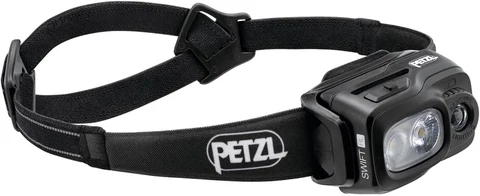
I’ve spent the last three months taking the Petzl Swift RL through everything from rainy midnight trail runs to freezing alpine starts. While most reviewers just copy-paste the spec sheet, I wanted to see if this 100g light actually lives up to the “1100 Lumen” hype in 2026.
The market is crowded now. Some sellers are fighting for the top spot, but the Swift RL has a few tricks that keep it relevant—and a few quirks that might annoy you.
Product Detail
- Ultra-powerful and intelligent headlamp, 1100 lumens allowing you to see up to 155 meters away
- Choice of two lighting modes, selected with a long hold: REACTIVE LIGHTING or STANDARD LIGHTING
- Longer burn time, greater visual comfort, and less manual operation with REACTIVE LIGHTING mode, which allows the light sensor to automatically adjust brightness and beam pattern, optimizing battery usage
- Continuous red lighting to preserve night vision and increase comfort when reading, without blinding those around you
- Lithium-ion 2350 mAh battery (included), rechargeable with USB-C port
Features:
- Color White: Night Vision
- Rechargeable lithium-ion battery
The “Reactive Lighting” Reality Check
The biggest selling point is Reactive Lighting. A sensor on the front “sees” the reflection of your light and adjusts the brightness automatically.
- The Good: When you look down at your watch or a map, it doesn’t blind you. It dims instantly. When you look 50 meters down the trail, it blasts. It saves a massive amount of battery by not over-illuminating close objects.
- The Bad: In heavy fog or snow, the sensor can get “confused” by the reflections off the water droplets. In those cases, you’ll want to switch to Standard Mode (constant light) to avoid a flickering effect.
Fit and Feel: No “Forehead Bounce”
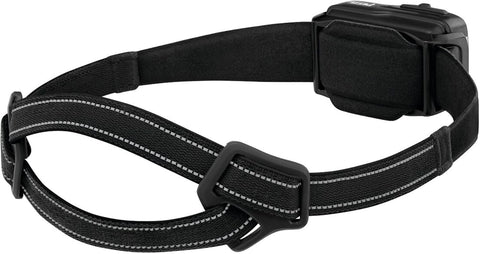
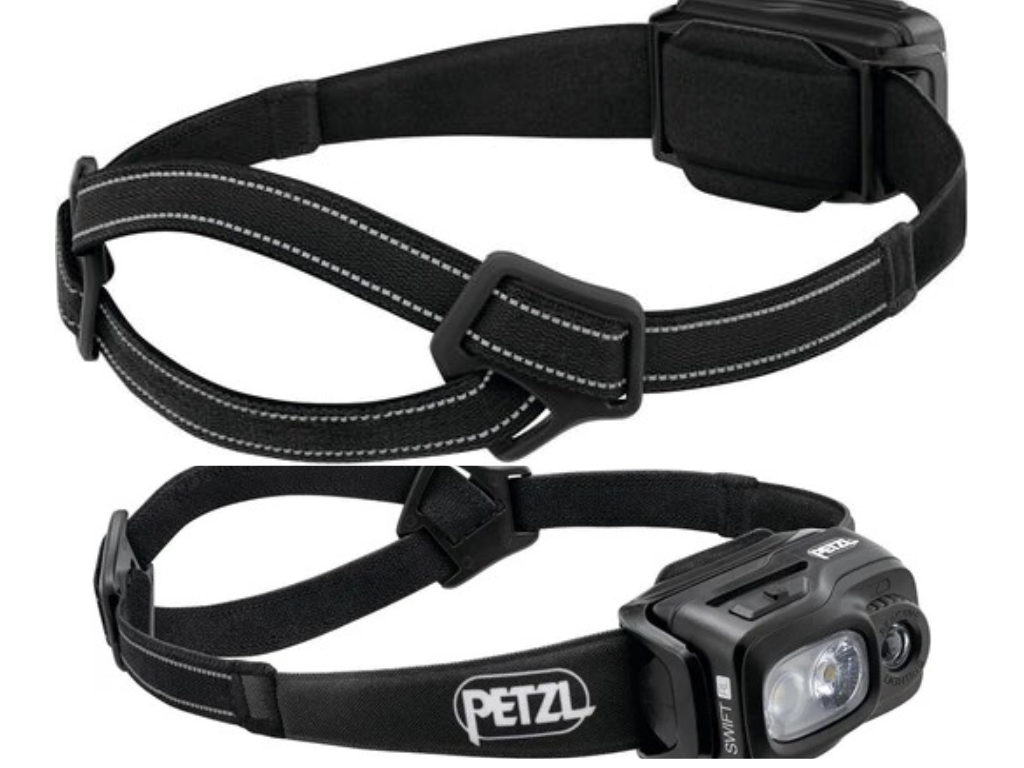
The split-headband design (the “bipiv”) is the unsung hero here. Most 1000-lumen lamps have a heavy battery pack at the back or a single strap that slides down your face when you sweat. The Petzl Swift RL stays glued to your forehead. Even during high-impact downhill sprints, I didn’t have to adjust it once. It’s arguably the most comfortable high-performance strap on the market today.
Mounting & Helmet Compatibility: The Alpine Edge
For climbers and mountaineers, the Petzl Swift RL offers a 60-degree tilt mechanism.
- Precision: I noticed that the hinge is surprisingly stiff and durable. Unlike cheaper lamps where the “click” wears out over time, this stays exactly where you point it.
- The Downside: Because the battery is integrated into the front housing, it can feel slightly “front-heavy” when mounted on a climbing helmet. You’ll need to tighten the split-band slightly more than usual to prevent it from shifting during vertical movement.
Real-World Durability: Can it Survive the Elements?
In 2026, we expect gear to last. I’ve dropped this unit onto jagged limestone twice and used it through a four-hour downpour.
- Lens Quality: The polycarbonate lens is highly scratch-resistant. Even after being shoved into a pack with climbing cams and carabiners, the beam remains clean without annoying light “artifacts” or shadows.
- Winter Performance: In -10°C conditions, the Lithium-Ion battery held up well. Be aware: like all batteries, it drains about 15-20% faster in extreme cold, so keep it in your jacket pocket until you’re ready to hit the trail.
Let’s Talk Specs (The 2026 Standards)
The 2026 version has moved fully to USB-C, which is a relief. No more carrying micro-USB cables just for your headlamp.
|
Real-World Use Case |
Brightness |
Battery Life |
|
Technical Descent |
1100 Lumens |
~2 Hours |
|
Steady Trail Jog |
300 Lumens |
~7-9 Hours |
|
Camp Cooking |
10 Lumens |
100+ Hours |
What I Didn’t Like (The Honest Truth)
No piece of gear is perfect. Here’s what bugged me:
- The Proprietary Battery: While you can charge it via USB-C, the battery itself is a specific Petzl shape (ACCU SWIFT RL). If it dies in the middle of a 100-mile race, you can’t just pop in AAA batteries. You must buy Petzl’s spare battery ($50+).
- The Lock Mechanism: It uses a sliding physical button. It’s effective, but if you have cold, numb fingers or are wearing thick winter gloves, it’s a bit fiddly compared to a simple “long-press to lock.”
Final Verdict: Who is this for?
If you are a weight-conscious trail runner or an alpinist who needs a reliable, smart beam that adapts to your environment, the Petzl Swift RL is still the king. It feels more “premium” and reliable than the plasticky Nitecore alternatives.
However, if you’re just a casual camper or a weekend walker, this is overkill. You are paying for a high-end sensor and specialized optics that you might not need.
You may also Like-Petzl Headlamps: Are They Good?
FAQ: User Questions I Get Often
Q: Is 1100 Lumens too bright?
For casual hiking? Yes. For technical running at 15km/h? No. You need that long “throw” to see obstacles before you trip over them.
Q: Can I use it in the rain?
It’s rated IPX4. It handles heavy rain and sweat perfectly. Just don’t submerge it in a lake.
Q: How do I know how much battery is left?
There is a 5-level gauge on the top of the unit. It’s very accurate, which helps eliminate “range anxiety” during long nights.
Q: Can I charge it while it’s turned on?
Yes! You can plug in a power bank via USB-C and keep the light running, though this adds weight to your head if the cable is dangling.