


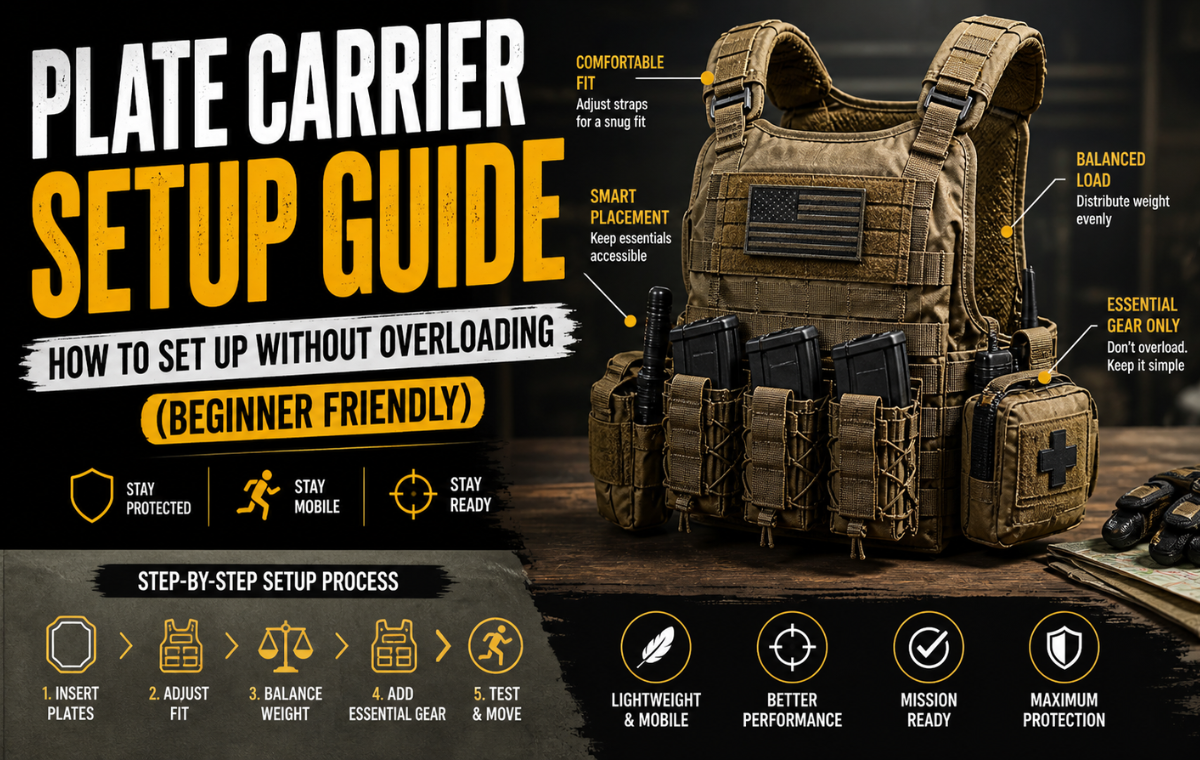
A proper plate carrier setup is the foundation of any tactical kit, and those who have been continuously involved in tactical operations know its importance. But beginners make their first mistake here, which costs them much more than expected. Therefore, we’ll discuss today the simplest and easiest steps to set up a plate carrier without overloading. Always remember one thing: A well-configured carrier should feel like an extension of your body, not a burden you have to fight against. This means focusing on a balanced, minimalist setup that prioritizes function over appearance.
Along with that, we’ll also look at the crucial plate carrier components, the most common plate carrier setup mistakes people make, and how to avoid them.
What is a Plate Carrier & Why Proper Setup Matters
Before we move ahead, let us first understand the setup steps, clarify its meaning, and explain why this setup matters. Simply understand a plate carrier as a high-performance vest designed to hold ballistic armor plates, protecting your vital organs from serious threats.
See this Plate Carrier: https://www.popsmokemedia.com/products/aspetto-kwiq-pc-2-plate-carrier-body-armor
Why a Proper Plate Carrier Setup Matters?
Beyond just an armor and a protective shield, the role of a plate carrier is far more, serving as a:
- Loading barrier for Ammunication
- Medical Supplies in need
- And carries communication equipments
However, a poorly configured carrier can:
- Restrict your movement
- cause premature fatigue
- And make it difficult to access your gear under stress.
When done right, your setup allows you to move fluidly, access tools instinctively, and stay in the fight longer. And the multi-functionality is precisely what makes clears your confusion on why a proper setup is so important
Also Read: Best Plate Carrier in 2026
Understanding the Different Plate Carrier Components
Before you start attaching pouches, it’s helpful to understand the main parts of the carrier you’ll be working with.
| Component of Plate Carrier | Their Functionality |
|---|---|
| Front and rear plate bags | The largest section of your carrier holds the armor plates for protection |
| Ballistic Plates | These are the actual protective inserts (such as steel, ceramic, or composite). Without these, even the carrier can’t protect you |
| Shoulder straps | used to adjust the carrier’s height. |
| Side panels | optional, but quite important to add extra protection by holding the side plates on your carrier |
| Cummerbund | A wide strap that wraps around your torso, securing the carrier and providing stability. |
| Quick-Release System | These are the buckles and cables, allowing rapid removal of the carrier in emergencies, such as giving you medical treatment |
| MOLLE/PALS webbing | A grid of nylon loops that allows you to attach pouches securely. |
Step-by-Step Plate Carrier Setup (Beginner Friendly)
Building out your plate carrier should be a deliberate process. We’ll walk through the fundamental steps, focusing on creating a balanced and functional system that serves your needs without becoming overloaded.
Step 1: Insert Armor Plates Correctly
The first step of Plate Carrier setup is installing the armor plates correctly. Most ballistic plates have a specific “wear face” or “strike face” that must be oriented towards the threat or outwards, so check for labels indicating which side faces out.
Once inside the plate bag, secure the internal retention straps tightly to prevent the plate from shifting or sagging, which can throw off the carrier’s fit.
Step 2: Adjust Plate Carrier Fit Properly
An improper fit is one of the most common and dangerous mistakes. For correct vertical placement, the top of the front plate should sit right at your sternal notch, which is the soft U-shaped dip at the base of your neck. This position ensures your heart, lungs, and major blood vessels are protected.
To adjust the height, use the shoulder straps. Also. Properly use the Cummerband to ensure a perfect fit of the plate carrier. Wrap it around your torso and secure it firmly. It should be tight enough that the carrier doesn’t bounce, but loose enough to breathe comfortably.
Step 3: Set Weight Distribution (Avoid Overloading)
Overloading always leads to slow mobility, heavy loads, and quick tiredness throughout the operation. This is why, when you’re doing a proper Plate Carrier Setup, you must have proper weight distribution that feels significantly lighter and reduces strain and pain on your shoulders and back.
Avoid hanging heavy items too far out on either side or too low on the carrier, as this can create an awkward pendulum effect when you move.
Also Read: Plate Carrier Buying Guide 2026
Step 4: Add Essential Gear Only (Minimalist Approach)
This is where discipline comes in. The temptation to fill every available MOLLE slot is strong, but it’s a trap that leads to an overloaded and inefficient kit.
Start with only what you absolutely need: three rifle magazines, a basic individual first aid kit (IFAK), and perhaps a multi-tool or a radio. This “less is more” approach ensures you remain mobile and agile.
Avoid overloading—mobility matters more than carrying everything. You can always add more gear later if a specific mission or training scenario requires it, but your baseline setup should remain lean and focused on the essentials.
Step 5: Smart Gear Placement Strategy
Where you place your gear is just as important as what you carry and indeed, a proper plate carrier setup is ensured when you know a perfect smart gear placement strategy.
- Your front panel should hold your primary rifle magazines, as this location allows for quick reloads with either hand.
- The cummerbund is a good spot for your medical kit and radio, but try to keep the profile slim to avoid snagging on doorways or branches.
- Your dominant-side shoulder pocket must remain clear to ensure a clean, consistent rifle stock weld.
- Anything you cannot access yourself, such as a hydration bladder, should be placed on the back panel so teammates can reach it.
Step 6: Test Your Setup in Real Movement
To make sure you’ve installed a proper plate carrier setup that performs perfectly, you need to test it once. Don’t just stand in front of a mirror; wear it and move. Perform some basic exercises like squats, burpees, and short sprints to see if anything shifts, chafes, or comes loose. Practice drawing magazines and accessing your medical kit to ensure you can reach everything smoothly.
Getting in and out of a vehicle is another great test, as it quickly reveals any snag hazards or items positioned awkwardly. This testing phase allows you to make small adjustments that will make a big difference in real-world use.
Best plate carrier setup for Different Use Cases
The ideal setup is not one-size-fits-all and should reflect your specific context. A civilian preparing for home defense has very different needs than a soldier on patrol.
Plate Carrier Setup for Civilians
The goal here is a slick, minimalist setup that can be put on quickly. Plate Carrier Setup for Civilians usually means a carrier with three rifle magazines on the front, a small medical kit on the cummerbund, and nothing else. Weight is kept to a minimum to preserve mobility inside a structure.
Law Enforcement Plate Carrier Setup
An officer’s setup often includes more utility items. It might hold two rifle magazines, a radio, handcuffs, and a taser, often worn over their soft body armor. The load is spread out to accommodate a wide range of tools for various situations.
Plate Carrier Setup for Army/Military
This is the most demanding use case in the USA rising a high demand for the Plate Carrier Setup for Army, requiring a higher loadout for sustained operations. A typical setup would include six or more rifle magazines, grenades, a full IFAK, a hydration bladder on the back, and communications equipment. Weight management becomes critical here.
Common Plate Carrier Setup Mistakes to Avoid
Many people make the same common mistakes when setting up their Plate Carrier for the first time. Let us discuss these mistakes and how to avoid them:
- One of the biggest mistakes people make is overloading the carrier with too much “just in case” gear, which kills mobility and drains stamina.
- The next mistake is wearing the carrier too low and setting the plate carrier on the stomach, leaving vital organs like the heart and chest exposed to threats.
- Poor gear placement is a big mistake people make when setting up a plate carrier and placing essential items like the medical kit and water out of reach on the back, where your hands can’t reach them quickly.
- Neglecting comfort and fit later causes operational hindrance, and a loose or tight fit makes the plate carrier useless.
- Uneven weight distribution, which people do not pay attention to at the time of setup, later leaves them with shoulder pain, strain, long-term discomfort and balancing issues.
- Lack of Padding on the shoulder straps can lead to chafing and hotspots that become unbearable over time.
Avoiding these mistakes can be highly beneficial for you and ensure that you have properly set up your plate carrier. People often purchase an expensive plate carrier from a major brand, believing they have acquired the absolute best gear; however, they frequently overlook these critical details and, in the end, are left with a failed equipment setup.
Pro Tips for Better Comfort & Performance
A few small details can greatly improve your experience with a plate carrier setup.
- First, actively manage your cables and hydration tubes. Use elastic bands, zip ties, or dedicated routing channels to tuck them away neatly, preventing them from snagging on your gear or the environment.
- Second, if your carrier will see extended use, invest in high-quality padded shoulder pads, as they distribute the weight more evenly and reduce fatigue.
- Finally, consider using a battle belt to offload some gear, such as your pistol, a dump pouch, and extra magazines. This separates your first-line (belt) and second-line (carrier) gear and distributes the total load across your hips and shoulders.
Final Verdict – Best Beginner Plate Carrier Setup
For anyone starting out, the best plate carrier setup is one that’s simple, functional, and light. You need to just focus on getting the fit perfect, carrying only the absolute essentials, and placing them where you can access them without thinking. A good starting point is a carrier with three rifle magazines up front, a medical kit on your non-dominant side, and nothing else.
From there, you can train with it, identify what works, and slowly add other items as your needs evolve. Looking ahead to 2026, the trend toward lighter materials and increased modularity continues, further reinforcing the wisdom of a minimalist, adaptable approach.
FAQs
How much should my plate carrier weigh?
There is no magic number, but a good goal for a beginner’s general-purpose setup is to stay under 25 pounds, including plates and a full loadout. The lighter, the better. Your mobility is your first line of defense, and a heavy carrier will compromise it faster than almost anything else.
Can I put a gear on my back panel?
You should only place items on your back that you do not need to access yourself. This area is reserved for team-oriented gear like hydration bladders, breaching tools, or extra medical supplies that a teammate can grab for you. Placing your personal IFAK or magazines on your back is a critical mistake.
What should I look for to ensure a perfect plate carrier setup?
You must look at a certain things for setting up a perfect plate carrier setup such as firstly choosing the correct plate carrier, inserting plates inside the bag correctly, checking fit and comfort properly, checking if the ballistic plate positions towards threat, adding all the essentials needed for the mission, and many other things that we’ve discussed here.
Do I really need side plates?
Side plates are not mandatory, they’re optional that depends on you whether you need it or not. Generally, people carry these side plates for additional protection. They’re typically used in military, or high-risk law enforcement roles where threats from the side are more probable.

