


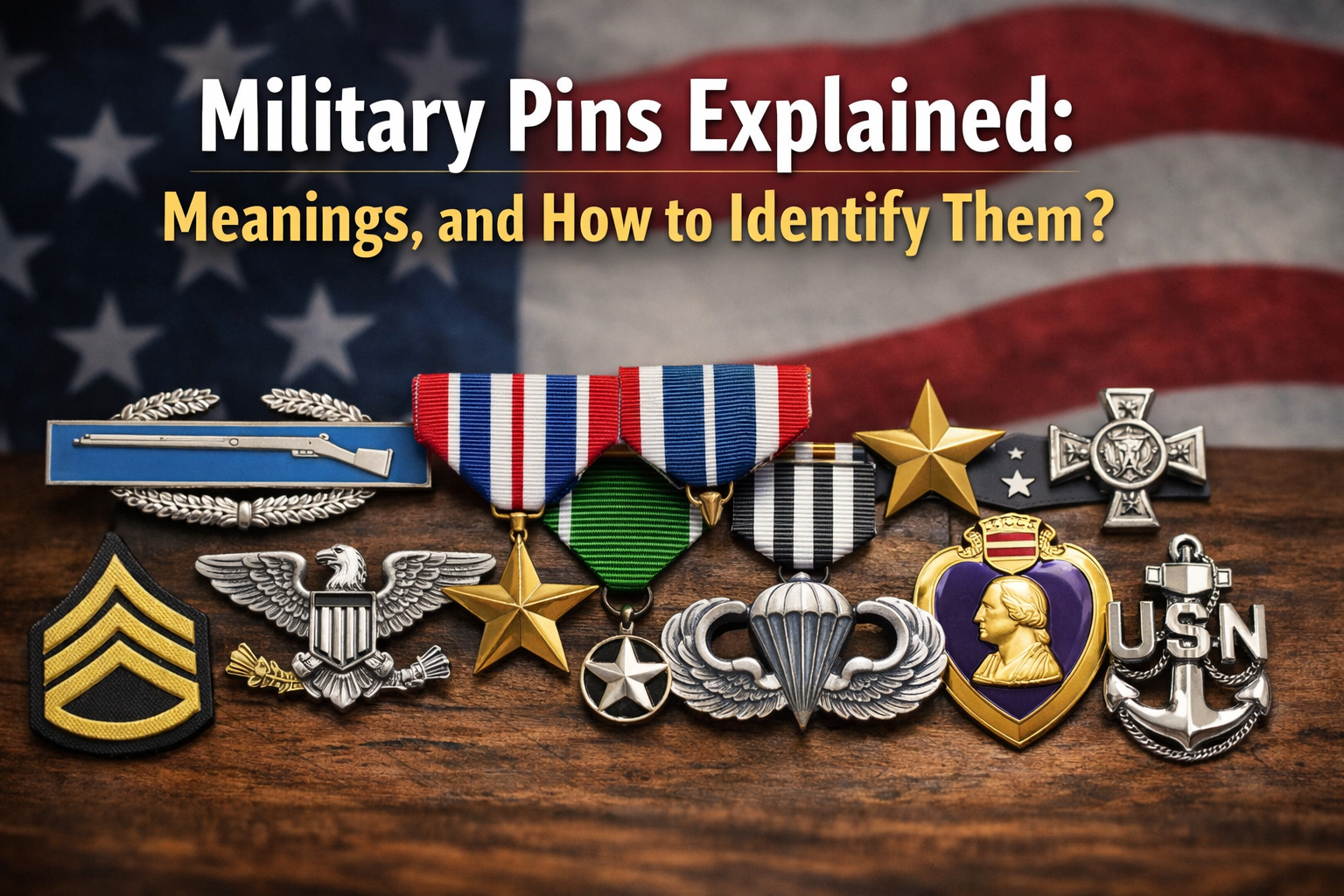
Military Pins are small in size but carry a deep meaning; they are a symbol that represents a soldier member’s rank, branch, skills, unit and years of service. Want to know more about military pins and how to identify them? This guide explains what military pins are, what they mean, and how to identify them correctly.
What Are Military Pins?
Military Pins are often called military lapel pins. They are made with metal insignia worn on uniforms to communicate important information at a glance. It identifies the rank, branch of service, qualifications, awards, or unit affiliation of military personnel. These pins are usually worn daily as part of a service uniform, as well as worn during ceremonies.
There are some rules to follow military regulations regarding size, placement, and design, ensuring consistency and clarity across all branches.
Types of Military Pins and Their Meanings
There are various types of military pins, but here we mentioned some of the essential pins, which are the first step to identifying them accurately.
Rank Pins
Rank pins are the most recognisable and standardised pins that indicate the position and authority of a service member.
Branch type
This means to identify the branch of service, such as the Army, Navy, Air Force, Marines, or Coast Guard. Each branch has its own identity, which means pins.
Unit Pins
Unit pins are used to represent a specific regiment, battalion, or squadron and help to identify pride among service members. It includes numbers, shields, or mottos.
Qualification and Skill Badges
Wings, rifles, or medical emblems mostly use these pins. This pin shows training or expertise in a service.
Service and Award Pins
Service pins are mainly used when a member has years of service, deployments, or participation in specific missions. This is an awarded type pin that indicates commendations or honourable conduct without being full-sized medals.
Why Military Pins Matter?
Here are the reasons-
- Both practical and symbolic purposes use pins.
- Helps to identify the recognized rank and qualifications of a service member.
- Types of military pins help to identify the emotional value tied to their service.
How to Identify Military Pins?
Identifying military pins correctly requires attention to detail. Here are the most reliable methods:
Look at the design closely
First look at the shapes, symbols and imagery of pins and compare with other pins.
Check Rank Symbols
It usually represents that rank; it indicates a different meaning in the military field. So check once and then take.
Look for Markings on the Back
Check the military pins properly because authentic military pins often have manufacturer marks, contract numbers, or service identifiers on the back. For example, here you can see an army pin that is the most purchased in the military.

