


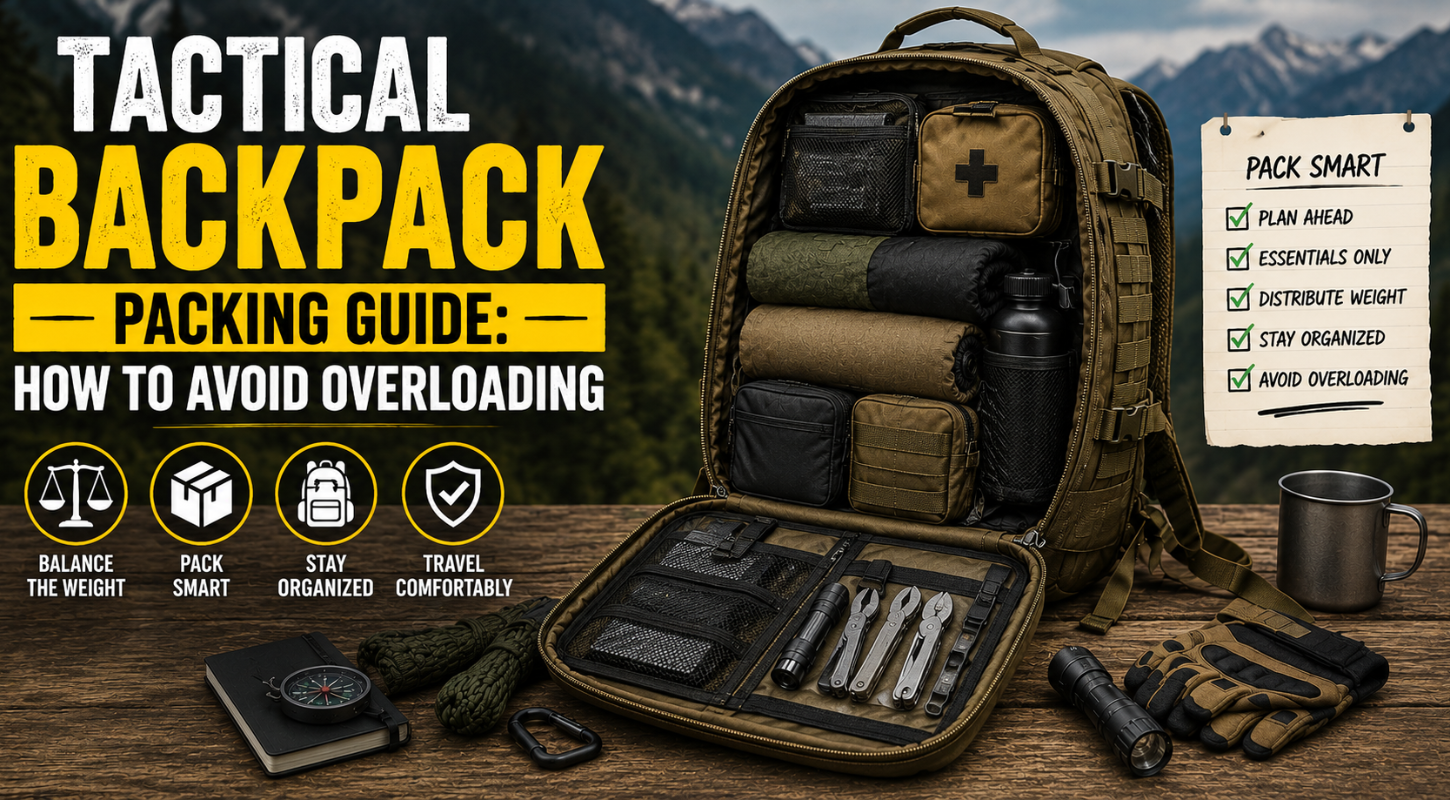
You bought a great tactical backpack. You packet it when needed. You lifted it — and the back immediately started paining.
Sound familiar?
Overloading a tactical backpack is the single most common mistake users make — beginners and veterans alike. The problem is not just discomfort. An overloaded tactical pack leads to spinal compression, shoulder injuries, reduced mobility in the field, and long-term musculoskeletal damage. In a real tactical or wilderness scenario, it can slow you down at the worst possible moment.
This guide is built around one goal: teaching you exactly how to avoid overloading your tactical backpack — what overloading means, how to spot it, what causes it, and how to prevent it with a system that actually works.
What Does “Overloading” a Tactical Backpack Actually Mean?
First of all, you must exactly understand the meaning of Overloading. Overloading is not just about carrying too much weight. It has three dimensions that every tactical backpack user needs to understand:
Check this Tactical Backpack before you go ahead:
https://www.popsmokemedia.com/products/5-11-rush-72-2-0-tactical-backpacks
- Weight Overloading — Expert says, the overall weight of your packed backpack should not exceed what your body can carry safely over the journey you plan for. Your backpack should carry about 10–15% of your total body weight for daily use, and up to 20–25% for short-term tactical or hiking missions.
- Distribution Overloading — Overloading isn’t just caused by excess weight; improper weight distribution can also be a factor. If the weight isn’t evenly distributed in the backpack or the pack’s design doesn’t support effective load distribution, even a relatively light load can feel heavier. For example, a 10 kg pack with poor weight distribution can feel and function like a 15 kg pack.
- Gear Overloading — Never overload with the unnecessary items that you need not require. Even if your total weight technically falls under limit, there’s no need to overload just with a thought “One more thing”. It might feel unnecessary overloading the pack, slows down access to critical gear, and affects your direct comfort.
All three types of overloading must be addressed. Fixing only the total weight without fixing distribution still results in injury and performance loss.
Is Overloading a Tactical Backpack Really a Problem?
Many users assume that because the tactical backpacks are built with highly durable and strong quality material, these can be packed to their maximum capacity without any issues. But that’s not correct. While these packs are incredibly durable, excessive weight creates several issues:
- Increased strain on shoulders and lower back
- Reduced endurance during long walks or hikes
- Difficulty accessing important gear quickly
- Increased wear on zippers and stitching
- Poor balance and mobility
The Root Causes of Overloading — And How to Fix Each One
Overloading doesn’t happen randomly, it has some specific, predictable reason. Let’s have a look at the most common causes of overloading tactical backpack and how to fix each:
Root Cause #1: The “Just in Case” Mindset
What it looks like: You pack items not because you need them but because you might need them. A second multi-tool. Three fire starters. An extra pair of boots. Each item seems logical in isolation — together they add 3–5 kg to your tactical backpack before you know it.
The Fix — Apply the 1-in-1-out Rule: Before you add any item, ask yourself “What specific scenario requires this item, and is that scenario likely enough to justify the weight?”. If you don’t get a justified answer to that question, leave the item.
Also, you must adapt another strict rule: If you’re adding one item, another existing item must come out.
Related Read: How to Choose the Right Tactical Backpack for Your Mission
Root Cause #2: Packing Without a Weight Budget
What it looks like: You just pack your backpack by feel — grabbing gears & putting it inside without tracking their weight. Everything feels light individually but the finished pack later weighs 5kg more than what you expected or intended.
The Fix — Weigh Everything Before It Goes In: Use a kitchen scale. Create a simple list with item names and weights before packing. Stop when you hit your weight budget. This sounds tedious the first time; after two or three sessions it takes less than five minutes and completely prevents this category of overloading.
Root Cause #3: Duplicate Functionality
What it looks like: One of the major reasons for overloading is packing with more items that serve the same functionalities. For Example: Two flashlights plus a headlamp, a fixed blade knife plus a folding knife plus a multi-tool with a knife blade.
The Fix — One Primary, One Backup Maximum: For any function, carry one primary tool and one backup for critical systems only (navigation, fire, water). Everything else — one item per function. Eliminate all redundant gear that does not serve as a genuine, necessary backup.
Root Cause #4: Wrong Pack Size for the Mission
What it looks like: Suppose you bought a 60L Tactical backpack for a day trip. Now, just because there’s space, you fill it unnecessarily. The pack now ends up at 18kg for what should have been a 6-hour outing.
The Fix — Match Pack Size to Mission Duration:
Use the perfect sized backpack that your mission demands. No overspaced, no less spaced.
| Mission Type | Recommended Pack Size |
|---|---|
| EDC / Urban Carry | 15–25L |
| Day Mission / Patrol | 25–35L |
| Overnight (1–2 nights) | 35–50L |
| Extended Field (3–5+ days) | 50–70L |
Root Cause #5: Not Accounting for Weight Added in the Field
What it looks like: You pack your tactical backpack to the weight limit before your mission. Then you add 3 liters of water from a stream, pick up supplies, or receive additional equipment — and your pack is now overloaded mid-mission.
The Fix — Pack to 80% of Your Limit: Leave a 20% buffer in your weight budget to account for water resupply, food additions, or gear received in the field. If your limit is 15 kg, pack to 12 kg before adding water and mission-specific additions.
Recommended Features That Help Prevent Overloading
Although, we’ve discussed the main causes of overloading and also the ways to fix them. Still, there are some high quality features and the most important as well that already help you prevent overloading.
Therefore while choosing the tactical backpack, look for:
- Adjustable sternum straps
- Compression straps
- Padded shoulder harness
- Load-lifter straps
- Hydration compatibility
- Reinforced stitching
Final Thoughts
Overloading a tactical backpack is not just about stuffing the backpack with burden but it’s more about performance problems, a safety problem, and eventually a health problem. But the good news is all these problems can be preventable which we’ve discussed.
You must understand that a perfect setup is not one that’s full of gear even when you really don’t need them but it is the one that exactly gives you what you need and nothing more.

