


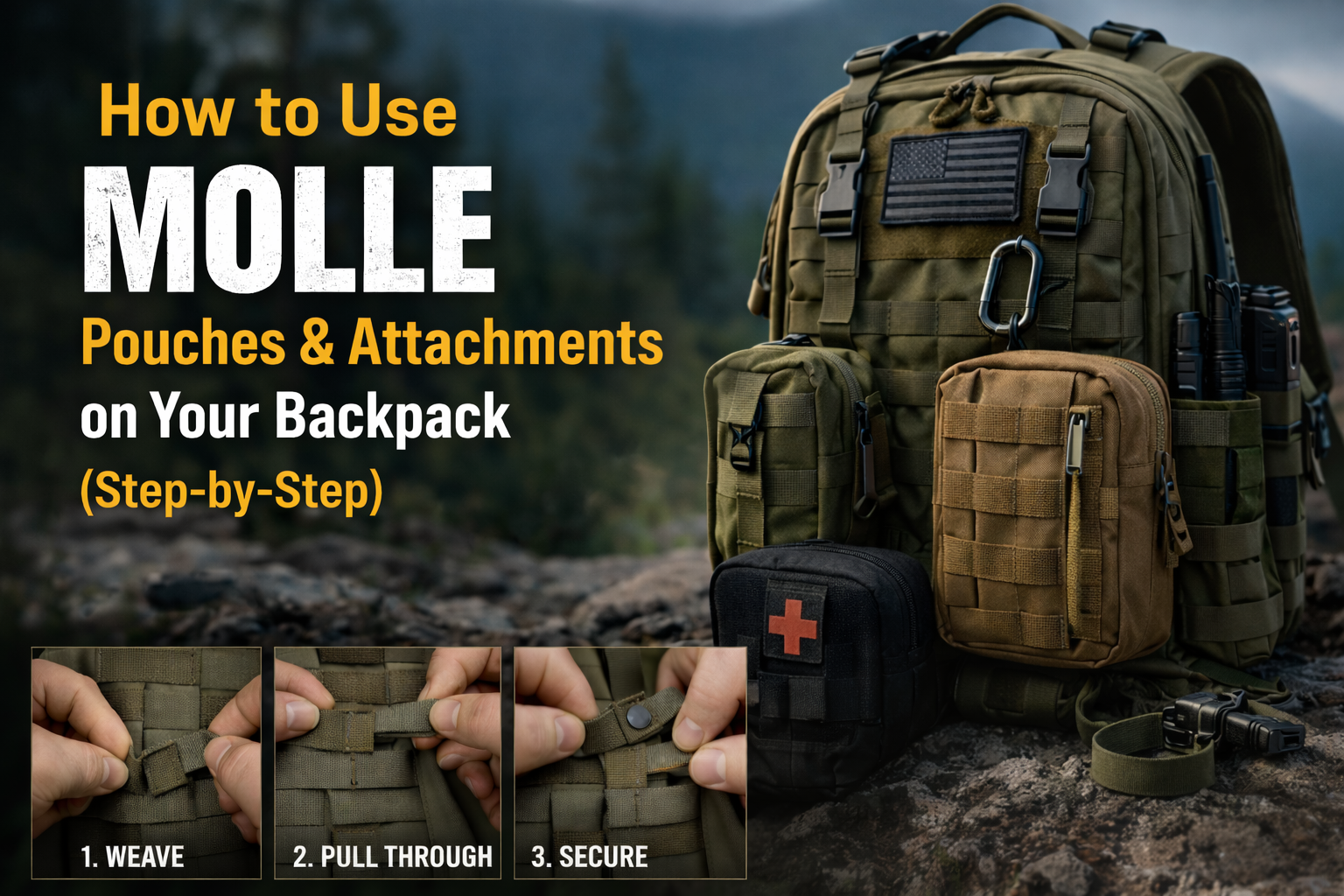
MOLLE pouches, attachments, and backpacks serve as the backbone of any serious mission or tactical operation; if they fail, significant complications can arise. The problem, however, is that most people either do not know how to use the MOLLE system at all, or—even if they do—they attach it incorrectly.
In today’s blog post, we will discuss some of the most crucial—yet very common—issues, ensuring that you can utilize your MOLLE backpack perfectly and remain mission-ready at all times. We will cover topics such as:
- What is the MOLLE system?
- How to attach MOLLE gear;
- Essential MOLLE attachments you should know about;
- And much more!
Introduction to MOLLE System
Before discussing anything regarding MOLLE, let’s first understand what a MOLLE system actually is.
MOLLE—also known as the Modular Lightweight Load-carrying Equipment—is a system of heavy-duty nylon webbing stitched onto backpacks, vests, and various other pieces of gear. It allows you to customize your loadout for your specific mission—attaching items such as pouches, magazines, gear, or any other accessories you require, exactly where you need them to be placed.
Instead of fixed compartments—like other gear—MOLLE attachments offer you:
- Flexibility
- Expandability
- Mission-specific setups
What is a MOLLE Backpack?
A MOLLE backpack is a backpack designed with rows of webbing that allow you to attach various tools and modular gear tailored to the specific requirements of your mission. This type of backpack proves highly beneficial for operational tasks. Let’s take a quick overview of its key features and benefits.
Key Benefits of a MOLLE Backpack:
- You can add or remove storage capacity at any time.
- It allows you to create a perfectly organized gear setup based on your specific usage needs.
- You can scale your setup—whether you require a lightweight configuration or a fully loaded, heavy-duty kit.
Types of MOLLE Pouches
Molle pouches are not all the same type, and you must understand these different types to create the perfect setup for yourself.
Utility Pouches
For general-purpose storage, like for tools, cables, or any random gear
Medical (IFAK) Pouches
These are mostly used for Tactical mission setups to attach magazines, ammo storage, and other gear.
Admin Pouches
Ideal pouches for small essentials like documents, pens, maps etc.
Dump Pouches
These types of MOLLE pouches are best used for quick access storage for temporary items.
Hydration Pouches
If your missions include long treks, then you should definitely buy these MOLLE pouches that allow you to carry a water bladder to stay hydrated and fulfill your water requirements.
How to Attach MOLLE Pouches (Step-by-Step Guide)
Choosing the perfect MOLLE pouch is just as important as knowing how to attach it to achieve a perfect gear setup. Here is a step-by-step guide.
Step 1: Align the Pouch
Place the pouch against the backpack’s MOLLE webbing.
Step 2: Start Weaving
Take the strap from the pouch and weave it through the backpack webbing, then back through the pouch loop.
Step 3: Alternate Weaving
Continue this in-and-out weaving pattern all the way down.
Step 4: Lock It In
Snap or secure the strap at the bottom.
Step 5: Check Stability
Pull the pouch—if it moves, you didn’t weave it tight enough.
Essential MOLLE Attachments You Should Know
Beyond just pouches, understanding essential MOLLE attachments is crucial for enhancing the functionality of your gear. So, let me just walk you through some of the most common attachments that should be part of your MOLLE setup.
- Carabiners → Quick clip gear
- MOLLE clips → Strong locking system
- D-rings → Hanging accessories
- Grimlocs → Lightweight plastic hooks
- Straps/adapters → Secure odd-shaped gear
Common Problems & Fixes
When using MOLLE pouches or even after learning how to attach MOLLE properly, many people face a lot of common problems which they avoid while buying the backpack. So, let’s have a look at the problem and also how to fix it to enjoy smooth functionality
1. Pouches Feel Loose
Loose pouches are one of the most common problems encountered, and this can be genuinely problematic; ideally, your pouches should remain perfectly stable on your gear to ensure proper functionality.
How to Fix this
So, the fix is very simple: just re-weave it properly (tight alternating pattern)
2. Gear Makes Noise
When a backpack is in motion, the internal gear or attachments collide with one another, creating unwanted noise, which poses a particular problem during outdoor or tactical use.
How to Fix this
To fix this problem, pack the items tightly, avoid empty spaces, and use silent plastic clips (Grimlocs) instead of metal attachments.
3. Overloading
Adding too many pouches and unnecessary gear makes the bag heavy, which affects both comfort and mobility.
How to Fix this
The best solution to this problem is to carry only the essential gear, and to avoid carrying unnecessary items.
4. Compatibility Issues
Some MOLLE pouches do not align correctly on the backpack, resulting in a loose fit or uneven attachment.
How to Fix this
Always use standard MOLLE-compatible gear, as the system follows universal webbing spacing. Avoid cheap or non-standard pouches that don’t align properly.
Maintenance & Care Tips
To maintain the long-lasting functionality of MOLLE backpacks or MOLLE attachments, you must pay close attention to their maintenance and care. Follow these steps.
- Clean with mild soap & water
- Avoid overloading straps
- Check stitching regularly
- Store in dry place
Simply knowing “how to choose a MOLLE pouch” or “how to attach MOLLE” is not sufficient to ensure that your gear functions properly for a lifetime. You must also practice proper care and maintenance so that the equipment continues to operate efficiently, fulfilling the very purpose for which you acquired it.
Final Verdict
To bring this short blog to a close, there is one important point I would like to share with you: MOLLE pouches, MOLLE attachments, and MOLLE backpacks can offer you a level of customization—and prove to be just as useful—as regular backpacks might not be able to provide, but only if you use them correctly.
You need to always remember three things:-
- Always weave straps properly
- Keep your setup balanced and minimal
- Choose quality pouches and attachments

