


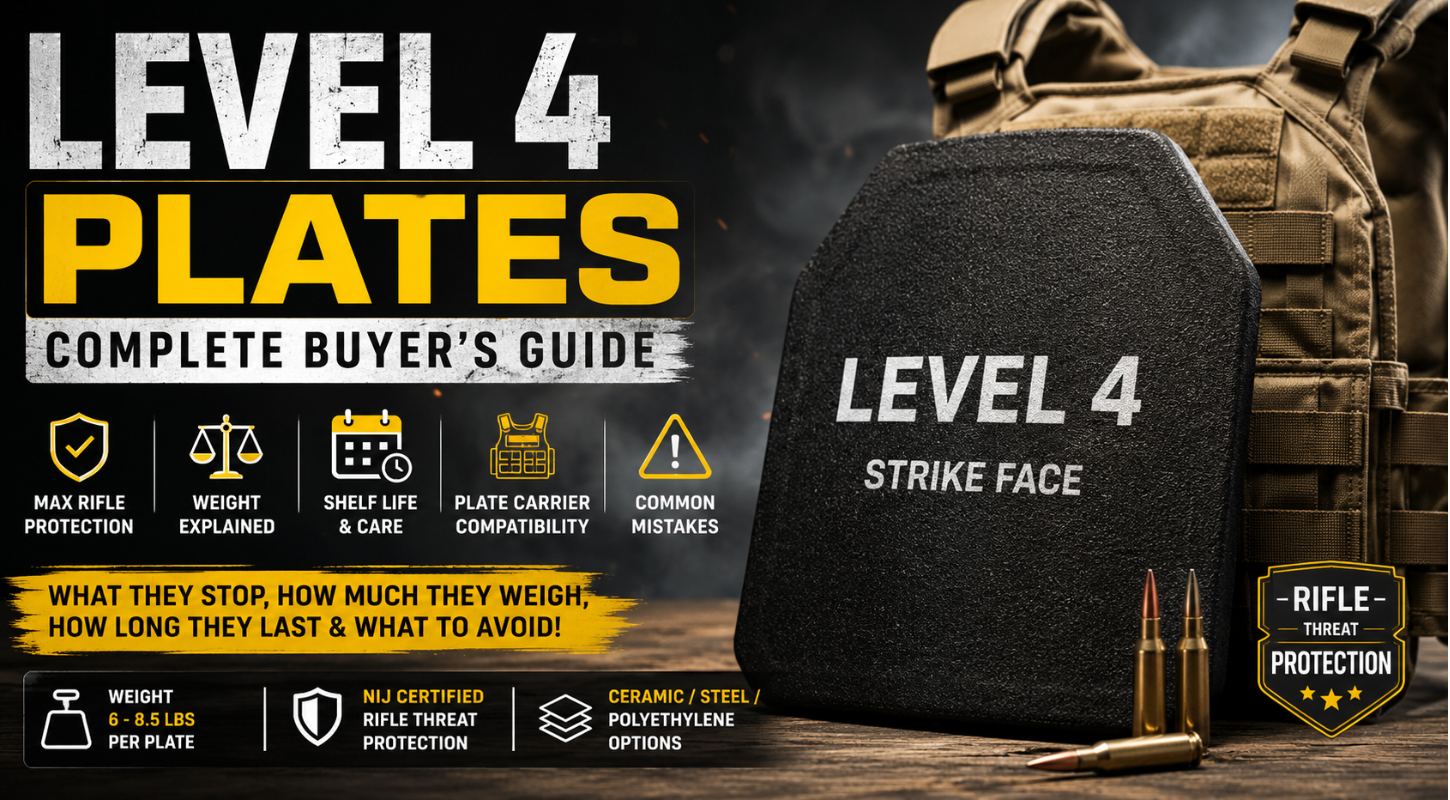
Body armor has become one of the most discussed and demanded protection equipment among everyone and everywhere, whether it’s a law enforcement professional, security personnel, prepared civilians, or shooting enthusiasts. Of all the protection levels available today, the most trending and considered best is the Level 4 plate, which offers the highest rifle-threat protection.
However, most of the buyers only focus on the protection rating rather than on some crucial factors such as the weight, comfort, sizing, plate carrier compatibility, and long-term durability. Understanding these crucial factors before actually buying can help you get the equipment that meets your needs while still remaining practical for real-world use.
So, let’s understand with this guide what Level 4 plates are, what threats they are designed to stop, how much they typically weigh, how to find a compatible plate carrier, and the most common mistakes every buyer should avoid before the purchase.
What Are Level 4 Plates?
Level 4 plates are hard armor shield plates that are designed to provide solid protection to your body against high-powered rifle threats. Unlike soft body armor, which primarily focuses on handgun threats, these armors are built to withstand significantly more powerful impacts.
These plates are mostly made using advanced materials such as ceramic, composite materials, and polyethylene combinations with a motive to allow these protective plates to absorb, disrupt, and disperse the energy of incoming rounds while reducing the risk of penetration.
What Threats Can Level 4 Plates Stop?
One of the most common questions in the minds of people is what threats these Level 4 plates stop and provide them protection against.
But generally, these Level 4 armor systems are designed to provide protection against some of the most challenging rifle threats encountered in civilian and professional applications, which may include various high-velocity rifle rounds that would easily pass through soft body armor.
However, no body armor system should be considered invincible; some are hard to break, but the level of protection differs; some easily break while some act as a solid guard. While the real-world performance can vary depending on factors such as
- Ammunition type
- Impact velocity
- Impact location
- Number of consecutive hits
- Plate condition
- Manufacturing quality
Buyers must understand the fact that the armor is designed to reduce the risk rather than entirely eliminating it. Even when the plate successfully prevents the penetration, the wearer may still experience significant blunt-force trauma from the impact.
And for this reason, checking a proper fit and the build quality used for making the plate is as important as the protection rating itself.
How Much Do Level 4 Plates Weigh?
These level 4 armors typically weigh from 5.5 to 9 pounds per plate. The material quality with which the plates are built also affects their weight. For example, a standard ceramic composite plate weighs from 6 to 8 pounds per plate, whereas some lightweight plates engineered to sit comfortably weigh from 5.5 to 6.5 pounds.
Most people overlook the physical burden of carrying armor for extended periods and solely focus on the protection ratings. However, depending on the material and construction, individual plates can vary significantly in weight.
Ceramic and composite designs are very often chosen as they provide strong protection alongside helping you reduce the overall weight. On the other hand, the traditional options may offer solid durability but can also increase the load carried by the user.
The total weight of a complete armor setup includes:
- Front plate
- Back plate
- Plate carrier
- Medical equipment
- Ammunition
- Hydration gear
- Additional pouches and accessories
It’s very important for the person expecting to wear this armor for training, professional duties, or extended movements to pay close attention to weight before they make a purchase decision to avoid after-effects.
Ceramic vs Steel vs Polyethylene Plates
| Feature | Ceramic Plates | Steel Plates | Polyethylene Plates |
|---|---|---|---|
| Weight | Medium | Heavy | Lightest |
| Protection | Excellent | Good | Excellent vs many rifle threats |
| Spall Risk | Low | High (unless coated) | Very low |
| Multi-hit Performance | Good | Very good | Moderate |
| Comfort | Good | Poor (heavy) | Excellent |
| Cost | Medium–High | Low–Medium | High |
| Durability | Can crack if abused | Extremely durable | Sensitive to heat |
Choosing the Right Plate Carrier for Level 4 Plates
Choosing the best plate carrier is as important as choosing the optimum body armor for providing solid protection. Even the best body armor plates can’t perform effectively if they’re paired with the wrong or imperfect plate carrier.
A good-quality plate carrier helps position the plates correctly over vital areas, protecting the main body organs while distributing weight more comfortably across the body.
Therefore, before selecting the carrier, consider the following points:
Proper Plate Fit
Not every plate carrier can accommodate plate size perfectly. You must verify the body armor plate carrier’s compatibility with the plate’s dimensions and size for its optimum utilization.
Weight Distribution
Usually, your plate carrier provides protection from both the front and the back side when carrying the plates. Therefore, you must maintain a perfect balance and weight distribution to avoid strains and discomfort on the back and the shoulder.
Comfort During Extended Wear
Adjustable shoulder straps, padding, and a secure fit can make a significant difference when armor is worn for long periods.
Mission Requirements
Some users want a plate carrier that’s always mission-ready, with a minimalist setup that’s more focused on mobility, while others require additional space for carrying extra equipment, communications gear, or medical supplies.
Choosing the correct carrier can dramatically improve comfort and usability without sacrificing protection.
Here’s the Best Plate Carrier for you – KWIQ PC 2
How to Choose the Right Level 4 Plates
It’s not like the best armor would be the one that is the most expensive. Instead, it is actually the option that matches your intended use and doesn’t cause you discomfort while carrying.
For example, some individuals who prioritize mobility may look for a lighter-weight design plate, while others may prioritize maximum protection regardless of the added weight.
So before purchasing, evaluate:
- Expected threat environment
- Duration of wear
- Weight tolerance
- Plate size requirements
- Carrier compatibility
- Budget considerations
One more important thing to note when choosing the right Level 4 plates is always buying from reputable manufacturers who provide clear specifications and testing information.
You might find a lower-priced option suitable for you at first, but when talking about the protection equipment, it shouldn’t be an area to compromise on quality that these low-priced plates lack.
Also Read this: How to Setup a Plate Carrier Properly
Common Mistakes Buyers Make
Whenever you’re on a hunt for the best plates for you, always avoid some of the most common mistakes that people make and later regret. These are:
Choosing Based Only on Price
The cheapest options are usually a kind of compromise with the quality, which is not a good choice when personal protection is involved. Therefore, always prioritize quality over price.
Ignoring Weight
Armor that is too heavy may reduce mobility and become uncomfortable during prolonged use.
Selecting the Wrong Size
Improper sizing can leave critical areas inadequately protected while also reducing comfort.
Forgetting About the Plate Carrier
Some buyers spend considerable time researching plates but give little attention to carrier selection.
Overlooking Product Specifications
Reading detailed specifications and understanding exactly what the product is designed to do can prevent costly mistakes later.
How Long Do Level 4 Plates Last?
Armor plates are not designed to last forever, but the ceramic plates carry a manufacturer’s warranty of 5 to 10 years.
Proper storage can help maximize longevity.
For best results:
- Store plates in a cool, dry environment.
- Avoid unnecessary impacts or drops.
- Inspect equipment regularly.
- Follow manufacturer recommendations.
Environmental factors such as moisture, extreme temperatures, and physical damage can affect long-term performance.
Regular inspection helps ensure the equipment remains in serviceable condition.
Are Level 4 Plates Worth It?
The decision to choose Level 4 plates depends entirely on the anticipated threat level. They provide the highest level of ballistic protection against armor-piercing ammunition, which is a capability no other NIJ level offers. If the environment you operate in presents this type of threat, then the protection they offer is invaluable.
However, this protection comes with the trade-offs of increased weight and higher cost. For situations where the primary threats are handguns or common rifle rounds
Not armor-piercing, a lighter and more mobile Level 3 or 3+ plate might be a more practical choice. The right armor is the one that best aligns with your specific safety needs and physical capabilities.
Final Thoughts
Level 4 plates offer a high level of rifle-threat protection, but protection ratings alone should not determine your buying decision. Weight, comfort, plate carrier compatibility, material selection, and long-term durability all play important roles in overall performance.
Taking the time to understand these factors can help you build a more effective armor setup while avoiding common mistakes that many first-time buyers make. Whether your priority is professional use, training, or personal preparedness, selecting the right combination of plates and carrier is essential for achieving both protection and practicality.

