


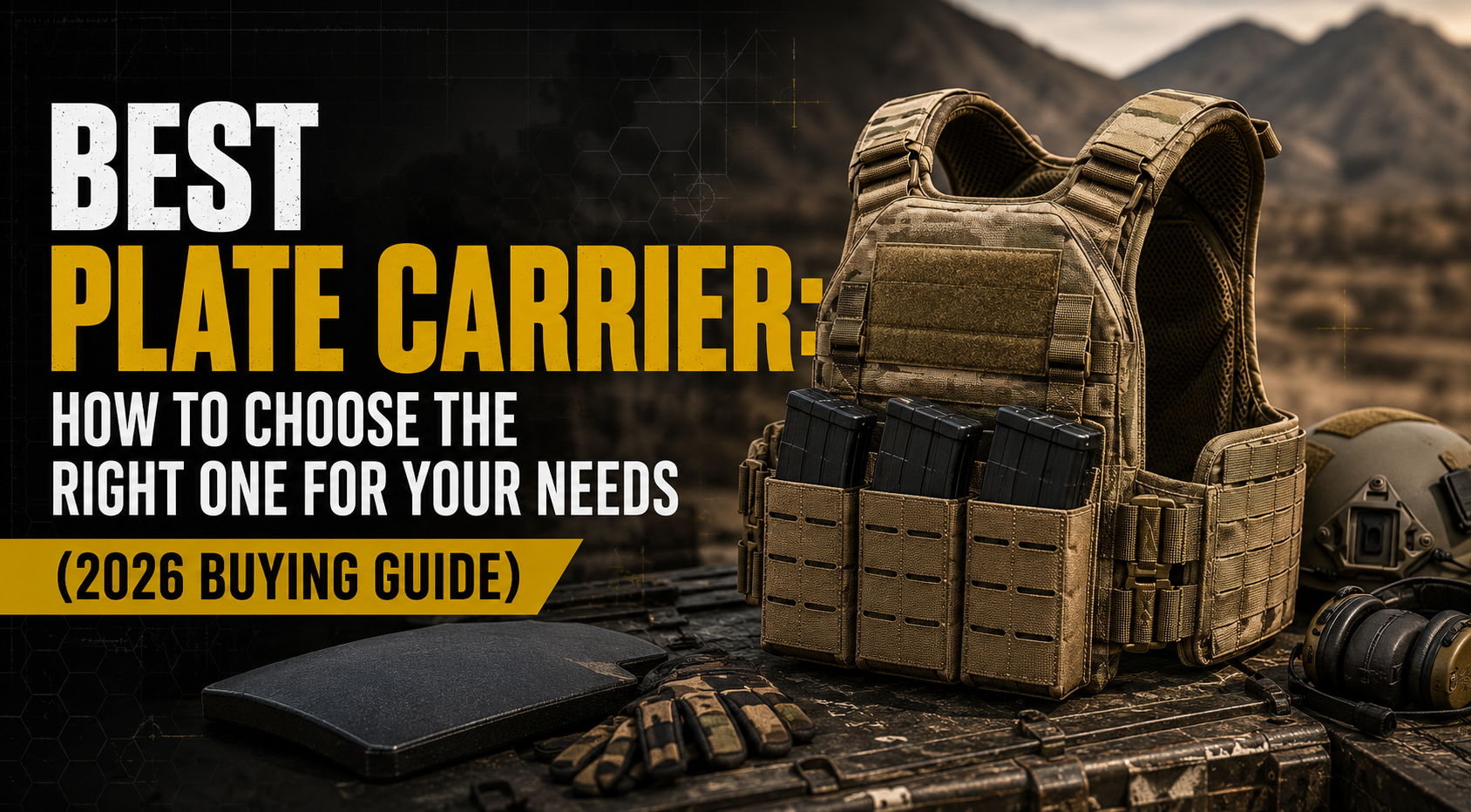
Choosing the best plate carrier isn’t just about picking the most expensive option available in the market. The right carrier varies for everyone depending on a lot of factors such as fit, comfort, durability, weight, adjustability, and the intent behind buying one for yourself, whether you will be using it for training, duty work, security, or outdoor activities.
In this guide, you’ll learn exactly what to look for before you buy, the features that matter most, common mistakes buyers make, and how to pick the right carrier based on your specific needs. Whether you’re buying your first plate carrier or upgrading your setup, this article will help you make a confident, informed decision instead of guessing based on price alone.
What Is a Plate Carrier?
A plate carrier is a vest-style piece of gear designed to carry and hold hard plate armors over your chest and back, giving you protection for vital body areas from high-velocity threats. Unlike the traditional heavy or bulky bulletproof body vests, a modern plate carrier is a lightweight, highly modular platform often used by the military, law enforcement, and civilians to carry ballistic protection and mission-essential gear.
Within the tactical gear ecosystem, the plate carrier acts as the base layer — everything else, from magazine pouches to medical kits and hydration packs, attaches to it. It’s the foundation your entire loadout is built around, whether you’re using it for professional duty, training, or personal preparedness.
How to Choose the Best Plate Carrier?
Choosing the best plate carrier does not depend on a single factor. A lot of factors decide which plate carrier is best for you, and the right plate carrier may differ for everyone depending on those factors. Let us look at some of the key factors deciding which plate carrier is right for you and which is not:
1. Fit and Adjustability
A plate carrier must be of perfect fit for your body. If it doesn’t fit properly, the carrier will shift, sag, or ride up-down-left-right during movements, causing distraction and discomfort —No matter how good the material quality is or how expensive it is. A proper fit is determined by correctly sized shoulder straps and a well-adjusted cummerbund, since these two components hold the plates snug against your body.
Everybody is built differently, so look for a carrier with a wide adjustment range on both the shoulders and the sides. This ensures the vest can be tightened or loosened enough to sit correctly whether you’re broad-shouldered, slim, or somewhere in between, and it also allows the carrier to fit properly over different layers of clothing.
2. Weight and Comfort
Sometimes buying the most expensive plate carrier is of no use if it’s too heavy to carry and uncomfortable throughout use. A lightweight plate carrier reduces fatigue, especially when you’re on a long mission or extended training sessions.
However, some heavy plate carrier often comes with more built-in padding and structure, allowing an even distribution of heavy plates throughout the body, helping with easy movement, but they also add bulk.
For most users, the sweet spot is a carrier that’s light enough to carry and allow move freely, but padded enough that it shouldn’t dig into your shoulder after just a few hours of wearing.
3. Material and Build Quality
Material quality matters for everyone, ensuring the plate carrier’s durability and long-term use. Therefore, always look for a plate carrier that’s built with reinforced fabrics such as Cordura nylon, strong bar-tacked stitching at stress points, and quality webbings wear or loosen under regular use.
A carrier can look great in photos but fall apart within months if the stitching is weak or the base material is thin. Since this is gear you may be relying on in serious situations, build quality is one area where cutting corners simply isn’t worth it.
4. Plate Compatibility
Plates come in different sizes and cuts —for example, 10’’ x 12’’ or SAPI-cut plates, which are not interchangeable. A plate carrier is not like a slime that takes shape and carries whatever the size of a plate is. You must always choose the plate carrier which is compatible with your plates and aligns with the plate’s dimensions.
However, this is one of the most overlooked buying mistakes. A carrier that doesn’t match your plate size will cause gaps, poor coverage, or plates that don’t sit correctly, which defeats the purpose of wearing armor in the first place.
5. Modular Design and Accessories
Most modern carriers use MOLLE or PALS webbing, which lets you attach pouches, holsters, and other accessories exactly where you need them. A modular design means your setup can grow and change as your needs evolve, instead of being locked into a fixed configuration.
Look for a carrier that supports a removable front placard and standard webbing patterns, so you have the flexibility to customize your loadout over time without needing to replace the whole carrier.
6. Breathability and Mobility
Plate carriers are often worn for hours at a time, sometimes in hot or physically demanding conditions. A carrier with mesh lining, ventilation channels, or moisture-wicking material will keep you noticeably cooler and more comfortable during extended wear.
Mobility matters just as much. A well-designed carrier allows a full range of motion for your arms and torso, so you can move, crouch, or reach without the vest restricting you or riding up.
Don’t Waste your time Finding the Best – Check This!
Best Plate Carrier Options Compared
If you’re looking for a carrier that checks nearly every box above — fit, weight, build quality, and modularity — the Aspetto KWIQ PC 2 stands out as one of the best all-around options on the market right now. Here’s what makes it worth a look:
- Faster don/doff with the upgraded 2″ KWIQ 2 shoulder release — get in and out of it in seconds, without losing stability.
- Fits more setups thanks to 8″x10″ and 10″x12″ configurations with bottom-loading front and back plate pockets.
- Built to customize with a removable MOLLE placard and a mesh MOLLE cummerbund, so your loadout can grow with you.
- Dialled-in fit from fully adjustable shoulder straps and laser-cut rubberized shoulder padding.
- Stays cool under pressure with anti-microbial, moisture-wicking ventilation built right in.
- ?? Made in the USA — a quiet but meaningful signal of consistent build quality.
In short, it hits the fit, comfort, and breathability marks covered earlier in this guide almost across the board — which is exactly why it’s a standout pick.
If you want a detailed comparison guide on the best plate carriers available in 2026, you can visit the link below:
Best Plate Carrier Review 2026: Choose the best for you
Features That Matter Most Before Buying
Before you finalize any plate carrier purchase, run it through this quick checklist:
- Proper fit — Shoulders and cummerbund should adjust to sit snugly without shifting.
- Durability — Reinforced material and solid stitching that can handle regular use.
- Weight — Light enough for extended wear, without sacrificing structure.
- Compatibility — Plate pockets match the exact size and cut of your armor plates.
- Comfort — Padding and ventilation that hold up over hours of wear.
- Adjustability — Enough range in the straps and cummerbund to fit your body type precisely.
If a carrier checks all six of these boxes, it’s a strong contender regardless of brand.
Common Mistakes When Buying a Plate Carrier
Even experienced buyers fall into a few predictable traps. Here’s what to avoid:
- Focusing only on price. The cheapest option often cuts corners on stitching, materials, or plate compatibility — problems you won’t notice until you’re already wearing it.
- Choosing the wrong size. A carrier that’s too big or too small won’t sit correctly, no matter how good the brand is.
- Ignoring plate compatibility. Buying a carrier before confirming it matches your plate size is one of the most common — and most avoidable — mistakes.
- Underestimating comfort. A carrier that feels fine for five minutes in a store can feel very different after two hours of real use. Always factor in padding, ventilation, and weight distribution.
- Overloading the carrier. Stacking on too many pouches and accessories adds unnecessary strain on the shoulders and cummerbund, and can affect how the plates sit over time.
Avoiding these four mistakes alone will put you ahead of most first-time buyers.
Best Plate Carrier Buying Guide Based on Your Needs
Not everyone needs the same setup. Here’s how priorities shift depending on your situation.
For Beginners
Focus on simplicity and comfort over advanced customization. A carrier with straightforward adjustment points, solid build quality, and a manageable price point is ideal while you’re still learning what setup works for you.
For Lightweight Setup
If speed and mobility are the priority — for training, patrol, or fast-moving scenarios — choose a carrier built from lightweight materials with minimal bulk. Prioritize breathability and a low-profile design over heavy padding.
For Professional Use
For duty work, long shifts, or high-threat environments, prioritize comfort during extended wear, strong load-bearing support, and a proven quick-release system. Durability and modular capacity become more important here than shaving off a few ounces of weight.
Plate Carrier Maintenance Tips
A well-maintained carrier lasts significantly longer and performs better when it matters.
- Cleaning: Remove the plates before cleaning. Spot-clean the carrier with a damp cloth and mild detergent — avoid machine washing, as it can damage the fabric and webbing.
- Storage: Store your carrier in a cool, dry place, away from direct sunlight, which can degrade nylon and stitching over time.
- Inspection: Regularly check for frayed webbing, loose stitching, worn Velcro, and damaged buckles, especially after heavy use.
- Avoid Harsh Chemicals: Stick to mild detergents. Bleach, strong solvents, or heavy-duty cleaners can weaken the fabric and degrade any moisture-wicking or anti-microbial coatings.
- Check the Quick-Release System: Test the quick-release mechanism periodically to make sure it engages and releases smoothly — this is safety-critical hardware, not just a convenience feature.
- Rotate and Inspect Plates Separately: Ballistic plates have their own maintenance needs and shelf life, separate from the carrier itself. Check them for cracks or damage whenever you inspect the carrier.
A few minutes of care after each use goes a long way toward protecting your investment.
Conclusion
There is no single “best plate carrier” that works for everyone. The right choice depends entirely on your fit, comfort needs, intended use, and budget — not on which model has the flashiest marketing or the highest price tag. What matters most is that you go in with a clear checklist — fit, weight, material quality, plate compatibility, modularity, and breathability — rather than picking based on looks or price alone.
Whether you’re a beginner setting up your first loadout, someone who needs a lightweight carrier for speed and mobility, or a professional who needs a carrier built for long shifts and heavy loadouts, the best plate carrier for you is the one that matches your actual use case, fits correctly, and holds up over time with proper care. Options like the Aspetto KWIQ PC 2 make a strong case as an all-around choice, but the real test is how well any carrier performs for your specific needs once you’re actually wearing it day after day.
Take the time to match a carrier to your requirements, maintain it properly, and avoid the common mistakes covered above, and you’ll end up with gear you can rely on, wear comfortably, and trust when it counts.

